
Tariffs Do Not Create Economic Wealth: Trump Is Wrong!

February 13, 2026
President Trump’s administration has at times associated its economic policy with that of Alexander Hamilton’s American System of Political Economy. Last month, at the Davos World Economic forum, U.S. Trade Representative, Jamieson Greer, presented a fairly accurate history of the application of tariffs from the President George Washington to President Franklin Roosevelt. However, his presentation was disingenuous for what it omitted.
Hamilton’s American System
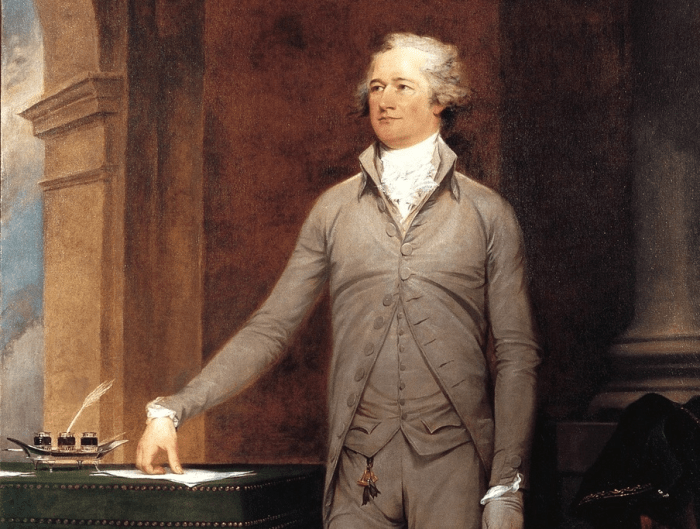
Most people do not know that Alexander Hamilton’s establishment of the First National Bank was an ingenious invention to reorganize the huge debts of the colonies to fund, supply capital, for a national credit facility. The establishment of this new credit capability was critical to the development and unification of the thirteen bankrupt fledgling colonies. Hamilton, insisting on the creation of a manufacturing sector had to fight against the backwardness of those, who intended for the United States to remain an agrarian based economy. Hamilton knew that for the United States to become an industrialized economy, internal improvements (infrastructure) were essential, which required the issuance of credit backed by the federal government. These were the key pillars, along with tariffs to protect (nurture) indigenous manufacturing, which comprised Hamilton’s American System.
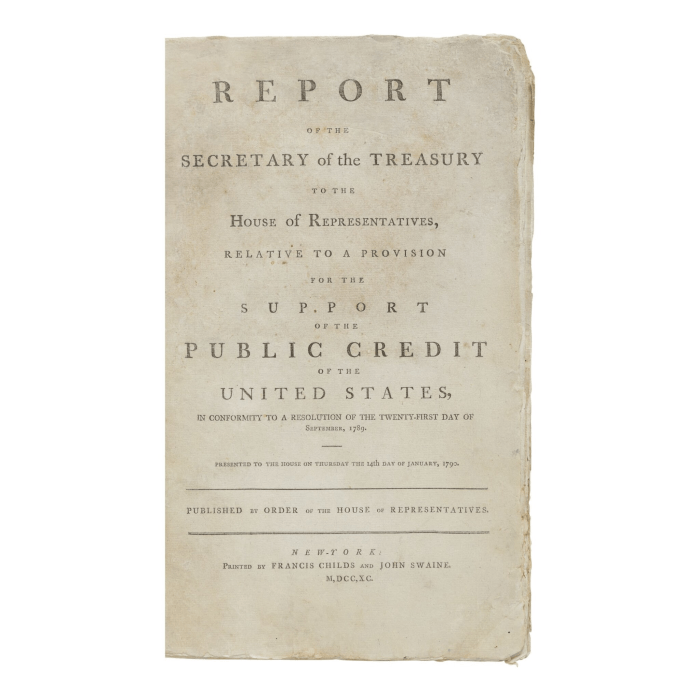
Hamilton’s economic principles are explicated in his four reports (listed below) approved by President George Washington, which transformed our young nation into an economic powerhouse.
Provision for the support of Public Credit, January 9th, 1790
Provision necessary for the establishment of a Public Credit (Report on a National Bank), December 13th, 1790
Opinion on the Constitutionality of the Bank, February 23rd, 1791
Report on Manufacturers, December 5th, 1791
Trump’s Tariff Fraud
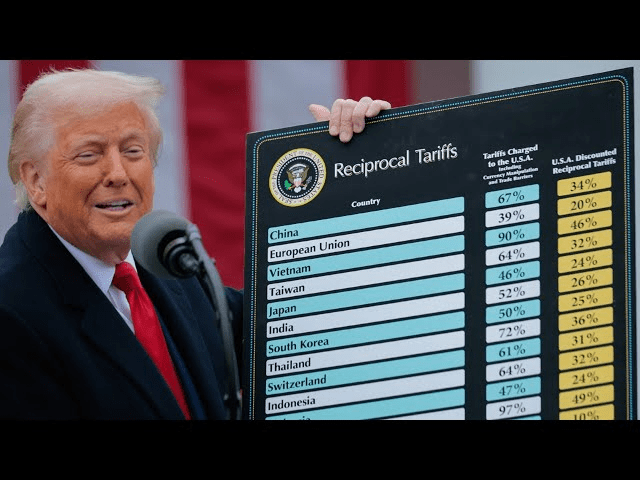
U.S. Trade Representative, Jamison Greer, obscured Hamilton’s American System byconspicuouslyrefusing to discuss Hamilton’s bank, and his policy to issue inexpensive credit for manufacturing and infrastructure. He intentionally only discussed tariffs. Tariffs by themselves do not generate new economic wealth nor generate growth in manufacturing. Hamilton and his students/followers, who spread his new American System school of economics to Europe, Russia and China, would have vehemently opposed President Trump’s misuse of tariffs, especially employing tariffs as a political weapon.
No one in the circles of President Trump, including Jamison Greer, will discuss the central feature of Hamilton’s American System, a national bank for issuance of credit to generate economic growth, especially in manufacturing. Greer et al are frauds, who are attempting to cloak their wrongheaded tariffs as Hamiltonian.
While Hamilton’s American System succeeded in building a mighty industrial Republic, President Trump’s tariff policy has been a miserable failure. Those of us, who have studied and understand Hamilton’s principles of economic science, predicted that President Trump’s senseless tariff regime in isolation, would fail.
Trump’s Tariff Failure
A just released report by the Federal Reserve Bank of New York, refutes President Trump’s claim that Americans are not paying for his reckless tariff policy. According to the bank, from January to August 2025; U.S. importers paid a whopping 94% of the increased price of imports due to President Trump’s tariff. For the months of September and October it was 92%. Therefore, it should be clear to everyone, that it is American businesses and citizens, who are absorbing the cost of President Trump’s failed, anti-Hamiltonian tariffs.
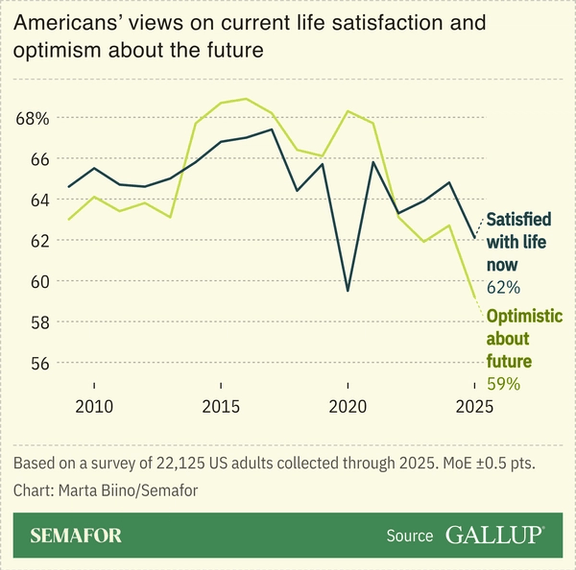
According to a new Gallup polling, Americans are more pessimistic about their future. Less than 60% of Americans surveyed in 2025, the first year of President Trump’s return to office, thought their lives would be better in five years. Those satisfied with their current lives is the second lowest in U.S. history.
The US trade deficit in goods for 2025 is projected to reach $1.26 trillion, an increase from 2024.
Paul Gallagher of EIR magazine exposes more failures of Trump’s tariff policy:
One year later, we can say that that policy has failed. Although tariffs did generate revenues amounting to some $250 billion, a study published on Jan. 19 by the Kiel Institut für Weltwirtschaft, shows that that money did not flow from abroad into the United States
But were the conditions created to allow U.S. manufacturers to replace those imports, which had become more expensive? Were industrial jobs created? Not quite. Manufacturing employment sank for 11 of the 12 months of 2025. Manufacturing activity ended the year at its lowest monthly level: Global demand for U.S. products (new orders) was declining, all the while that global manufacturing production was increasing,
But what has grown is debt: government debt, corporate debt, household debt and banking debt—although the latter is hidden behind “assets.” At this point, 20% of the government budget goes to pay debt service. Corporate debt increased by several billion dollars in one year, while household debt in Q3 2025 was at $18.9 trillion, an increase of $642 billion year-on-year. That amounts to the entire budget of a major industrialized country such as Germany.
Read below my earlier posts on this topic.
Remembering Nancy Spannaus, Historian & Advocate for American System of Economics
Hamilton versus Wall Street: Relevance to Ethiopia & Africa
Nations Must Study Alexander Hamilton’s Principles of Political Economy
Alexander Hamilton’s Credit System Is Necessary for Africa’s Development
Lawrence Freeman is a Political-Economic Analyst for Africa, who has been involved in economic development policies for Africa for over 35 years. He is a teacher, writer, public speaker, consultant on Africa, and an analyst of global strategic relations. Mr. Freeman strongly believes that economic development is an essential human right. He is the creator of the blog: lawrencefreemanafricaandtheworld.com, also publishes on: lawrencefreeman.substack.com, “Freeman’s Africa and the World, and on X @lkfreemansafrica